Hyperextended Knee: Symptoms, Treatment, Recovery Time, and Relief
Key Takeaways
- A hyperextended knee happens when the joint bends backward past its normal range.
- Common symptoms include pain, swelling, stiffness, bruising, and instability.
- Early care often includes rest, ice, compression, elevation, and activity reduction.
- Recovery time can range from days to weeks depending on severity.
- Severe pain, buckling, or major swelling can point to a torn ligament and should be checked.
Hyperextended knee injuries can be painful, frustrating, and confusing, especially when you are not sure if you should rest, stretch, or keep walking. If your knee bent backward farther than it should, you may be dealing with a hyperextended knee. The good news is that many mild cases improve with the right care, support, and a gradual return to movement.
A hyperextended knee happens when the joint is forced past its normal straight position. This can strain or damage ligaments, irritate soft tissue, and lead to swelling, pain, and instability. For some people, it feels like a quick tweak. For others, it can feel sharp, weak, or hard to trust when walking.

What are the symptoms of a hyperextended knee?
Hyperextended knee symptoms can vary based on how severe the injury is. Common signs include pain at the front or back of the knee, swelling, stiffness, bruising, and trouble fully bending or straightening the leg. You may also notice weakness, wobbling, or the feeling that your knee could give out.
Other signs of a hyperextended knee injury can include tenderness around the joint, pain when putting weight on the leg, and reduced range of motion. In more serious cases, you may hear or feel a pop at the time of injury. That can point to a ligament injury and should not be ignored.
What causes a hyperextended knee?
This injury often happens during sports, workouts, falls, or sudden awkward steps. It is common in activities that involve jumping, cutting, sprinting, or quick stops. A direct hit to the front of the knee can also push the joint backward and cause hyperextension.
You do not have to be an athlete to deal with it. Slipping on stairs, stepping into a hole, or landing wrong during everyday movement can be enough to strain the knee.
Can you walk on a hyperextended knee?
Sometimes you can walk on a hyperextended knee, but that does not always mean the injury is minor. If you can bear weight with only mild discomfort, you may have a mild strain. If walking feels unstable, very painful, or causes the knee to buckle, it is a sign to stop and get evaluated.
As a general rule, avoid pushing through pain. Walking too much too soon can make swelling worse and slow healing.
Hyperextended knee treatment: what should you do first?
Hyperextended knee treatment usually starts with rest, ice, compression, and elevation during the first day or two. This helps calm swelling and protect the joint. You may also need to limit activity, use a brace, or use crutches if weight bearing is painful.
After the early stage, gentle movement becomes important. Light range of motion work and gradual strengthening can help prevent stiffness and support recovery. If you want more guidance on comfort strategies, you can read Muscle MX resources on the fastest ways to relieve knee pain and heat or ice for knee pain.
How long is hyperextended knee recovery time?
Hyperextended knee recovery time depends on the severity of the injury. A mild case may improve in a few days to a few weeks. A moderate injury can take several weeks. If a ligament is torn or the knee is badly unstable, recovery may take much longer and may require formal rehab.
The biggest factors are swelling, pain level, stability, and whether other structures were injured. If symptoms are not improving, or if they are getting worse, it is smart to get medical advice.
Hyperextended knee exercises and rehab basics
Knee hyperextension rehab should be gradual. Early on, the goal is to restore comfortable movement and reduce stiffness. Later, the focus shifts to strength, balance, and control.
Helpful hyperextended knee exercises may include gentle heel slides, quad sets, straight leg raises, and supported balance work if tolerated. As healing improves, you may add more mobility and strengthening. If you need ideas for gentle flexibility work, see best stretches for knee pain.
Do not force deep stretches or high impact exercise too early. If an exercise increases sharp pain or swelling, back off.
Hyperextended knee vs torn ligament
A mild hyperextended knee can involve overstretched tissue without a full tear. A torn ligament is more serious and may come with a pop, major swelling, bruising, instability, or trouble bearing weight. Because the symptoms can overlap, it is important to pay attention to how your knee feels over the first 24 to 72 hours.
If your knee feels loose, locks up, gives out, or stays very swollen, a medical exam can help rule out ligament damage.
Finding pain relief while your knee heals
Hyperextended knee pain relief should support healing, not mask a serious injury. Ice can help early swelling. Later, some people find that alternating temperature support feels better depending on stiffness and soreness.
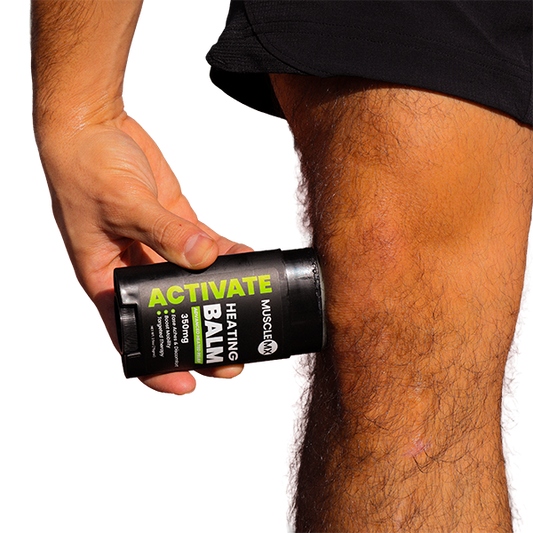
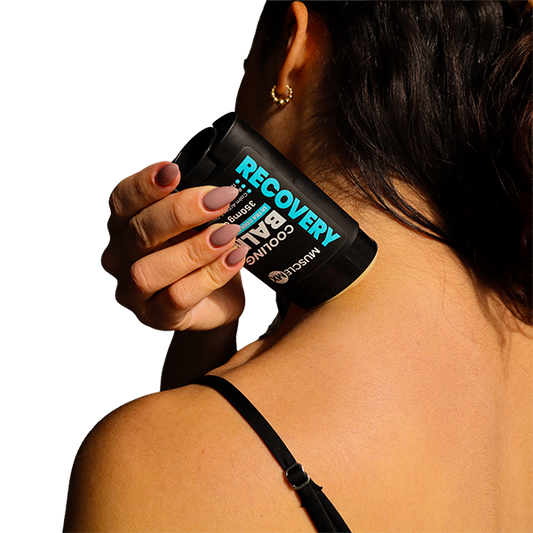
Topical products can also be part of your comfort routine. Some people use heating and cooling balms, cbd balms, or cbd lotion around the area for temporary relief and daily support. If you want to explore options, Muscle MX offers cbd balms designed for targeted use. Keep product use realistic and follow label directions.
When should you see a doctor?
You should get checked if you cannot bear weight, your knee looks deformed, swelling is severe, pain is intense, or the joint feels unstable. It is also worth getting medical advice if symptoms do not improve after a few days of home care.
A hyperextended knee can be mild, but it can also involve ligament damage. If you are unsure, getting clarity early can help you recover more safely.
If you are looking for ways to support comfort while your knee heals, Muscle MX has resources and topical options that can fit naturally into your routine.
FAQ's About Hyperextended Knee
What are the signs of a hyperextended knee injury?
Pain, swelling, stiffness, bruising, weakness, and a feeling of instability are common signs.
Can you walk on a hyperextended knee?
Sometimes yes, but if walking is painful or the knee feels unstable, stop and get it checked.
How do you heal a hyperextended knee?
Start with rest and swelling control, then ease into gentle movement and strengthening as tolerated.
What is the recovery time for a hyperextended knee?
Mild cases may improve within days to weeks, while more serious injuries can take longer.
What exercises help during knee hyperextension rehab?
Gentle range of motion work, quad activation, leg raises, and balance drills may help when done at the right stage.
Resources
-
American Academy of Orthopaedic Surgeons — https://orthoinfo.aaos.org/
-
Cleveland Clinic — https://my.clevelandclinic.org/
-
Mayo Clinic — https://www.mayoclinic.org/
-
MedlinePlus — https://medlineplus.gov/
-
National Institute of Arthritis and Musculoskeletal and Skin Diseases — https://www.niams.nih.gov/